employee experience | On the CatalystOne blog we cover subjects regarding HR technology, HR systems, HR processes, Performance & Talent Management and more. (2)
Developing an organizational culture where people perceive they can perform and have well-being is essential for organizations to attract and retain relevant talent. A central component of such a culture is social belonging.
Organizational culture is a well-discussed topic for its potential to make or break execution. Developing the culture is a journey that needs continuous nurturing. The bigger the organization grows, the more challenging it is to ensure you cultivate the culture appropriately to support the strategy into execution.
Today, the younger generations push for a different work environment. While a desire for change existed before Covid-19, the pandemic brought a rapid work environment transformation and a record-high number of people who left their jobs.
Attracting and retaining talent is a critical workforce issue today. When talent evaluates future employers, they place great importance on the employer brand. It is also proven that employer branding has a positive effect on retention.
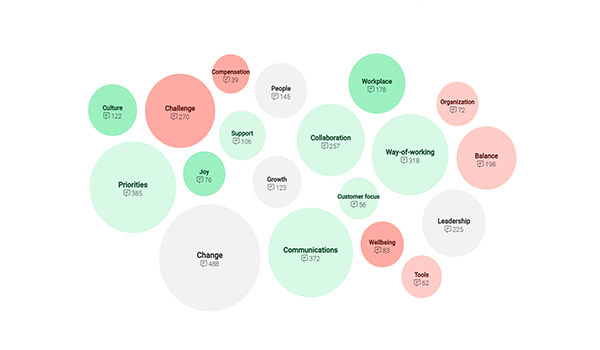
Organizations often encourage their employees to write free text comments in employee surveys. These comments can prove a gold mine as they provide the manager with context to the measurement result and encourage and facilitate the critical team dialogue.
Many managers, senior leaders, and HR leaders spend a lot of time understanding the well-being of employees and what may be in the way of performance. There are several ways you can work to understand your employees. Here are five tips for when using a modern employee survey as a tool to continuously track and know the employee experience:
Insights from an employee survey can create great value for leaders and HR, and the entire organization, including the employees themselves. For the employee survey measurement to deliver valuable and useful insights, the eight best tips are to:
It’s been a strange few years for the modern workplace, with seismic shifts in attitudes, office spaces and, most importantly, employee expectations. So what should the modern HR team focus on in the second half of 2022?
The need for organizations to manage the employee experience and well-being more frequently is rapidly increasing. This shift is primarily driven by our world changing faster with organizations following suit and new, evolving expectations of the younger generations.